
Roblox Automate a Restaurant Best Recipes Tier List
Rank dishes by profit, ingredient reliability, and drone-friendly throughput.
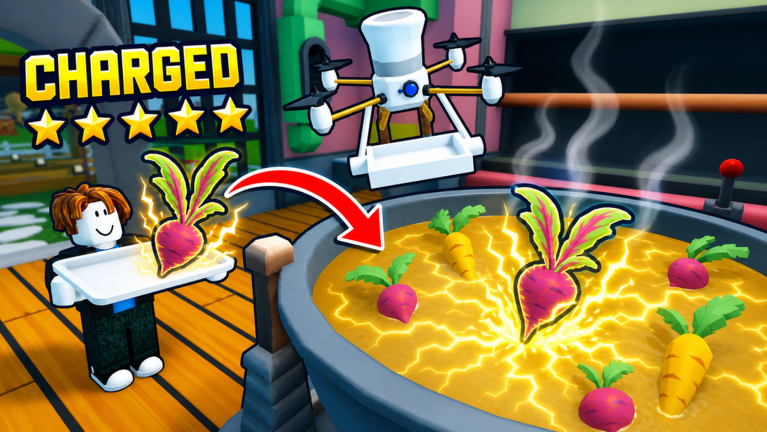
Best Recipes Tier List — Automate a Restaurant
This page ranks recipe categories for Automate a Restaurant, the Roblox incremental simulator from m_experiment (released May 25, 2026). We do not publish fabricated dish formulas—the game is built around experimentation. Instead, this tier list tells you which kinds of recipes to prioritize while you log your own discoveries, fund your first drones, and keep a shared kitchen profitable with friends (online co-op, roughly 10 players).
Pair this list with Discover Recipes for experiment habits and the Recipe Checklist so tier calls become checked boxes, not vague goals.
Ranking criteria
| Factor | Weight | Why it matters |
|---|---|---|
| Profit per minute | High | Customers fund crops, drones, and plot expansion |
| Ingredient reliability | High | A flashy plate you can cook once is not an S tier |
| Prep steps | Medium | Fewer handoffs survive automation better |
| Rare ingredient cost | Medium | Hunt time is real time—see Rare Ingredients |
| Co-op compatibility | Medium | Shared fridges punish hoarded rares |
S tier — Staple engines
Profile: High volume, mostly starter or fast-regrowing crops, stable customer demand, easy to slot into harvest → cook → serve lines.
Examples (archetypes, not fixed formulas):
- Simple single-crop plates you can plant in a tight loop.
- Two-part basics where both ingredients share the same growth cycle.
- Early combo dishes that still sell well before rare hunts unlock.
Why S tier wins: They fund the first harvest and serve drones without waiting on rare drops. In co-op, S tier dishes keep cash flowing while one player hunts.
Action: Log exact ingredients when you discover one. Mark it on the Recipe Checklist and build one dedicated station before chasing novelty.
A tier — Bridge recipes
Profile: Strong margin, occasionally needs one mid-tier crop or a short hunt route you can complete in one session.
When to promote to S: After you stabilize planting timers and a cook drone covers the extra prep step.
When to demote: If a patch nerfs crop yield or customer patience—recheck the Updates Hub before grinding.
B tier — Situational specialists
Profile: Excellent when a co-op partner covers your bottleneck (cook-heavy plates while you harvest, for example). Solo players may keep these on manual serve until drones catch up.
Use case: Rush windows when customer queues spike—see Production Line Layout for queue-friendly placement.
C tier — Learning experiments
Profile: Low margin or awkward ingredient timing, but useful for teaching experiment logging and UI familiarity.
Do not build permanent layout around C tier plates unless you enjoy the mechanic. Finish Getting Started goals first.
D tier — Inventory clutter
Profile: Costs more to cook than it returns, needs rares you cannot farm reliably, or blocks drone pathing with extra stations.
Keep one discovery for collection pride if you want—sell or deprioritize the rest when inventory pressure hits.
Early-game priority order
- Unlock any repeatable dish from crops you already plant every login.
- Promote the highest coins per minute dish you can cook ten times in a row without running out of inputs.
- Only then chase rare-ingredient showpieces—one hunt route at a time.
- Re-test margins after buying your first cook drone; automation changes which prep steps matter.
Mid-game and scaling
When drones handle harvest and serve, recipe tier shifts toward cook-time efficiency. A slightly lower-margin dish that never stalls the cook station beats a theoretical S tier that jams the line.
Cross-read Drone Priority before spending every upgrade on new crops. Sometimes the best “recipe” upgrade is a shorter walk path, not a new experiment.
Co-op etiquette
Before labeling a dish S tier for your group, ask:
- Does everyone agree on ingredient reservations?
- Is someone actively hunting the rare you depend on?
- Did a friend already dedicate a station to the same plate?
Read Co-op Shared Restaurant before rewriting shared layouts for a B tier personal favorite.
What we will not do
- Paste unverified “secret combos” from random Discord screenshots.
- Copy Run a Restaurant recipe lists—different game, different economy.
- Promise codes will fix a D tier dish—Codes Hub has no verified actives as of Aug 2026.
Related pages
- Tier List Hub — hub overview and S–D definitions
- Drone Priority — which automation role unlocks first
- Guides Hub — rare ingredients, production line, co-op
- Tools Hub — checklist workflows for session goals
Test one tier change per session. When your own log proves a dish belongs in S tier for your save, trust your spreadsheet—not a outdated wiki row.
Frequently Asked Questions
Quick answers to the most common questions.
Why are there no exact recipe formulas on this tier list?
Automate a Restaurant centers on experimentation. We rank archetypes and criteria so you can validate discoveries yourself without fabricated combos.
What is the best early-game recipe type?
Prioritize repeatable dishes built from fast crops you can plant every session—high coins per minute beats rare showpieces you can only cook once.
When should I chase rare-ingredient recipes?
After you have at least one reliable S-tier staple funding drones and plot upgrades. Hunt one rare route at a time.
Do co-op partners share the same tier list?
Mostly yes for cash-flow staples, but roles differ. Agree who hunts rares and who covers cook or serve before promoting B tier favorites.
Will patches invalidate this list?
Balance changes can. Re-test margins after updates listed on the Updates Hub instead of assuming old tiers still hold.